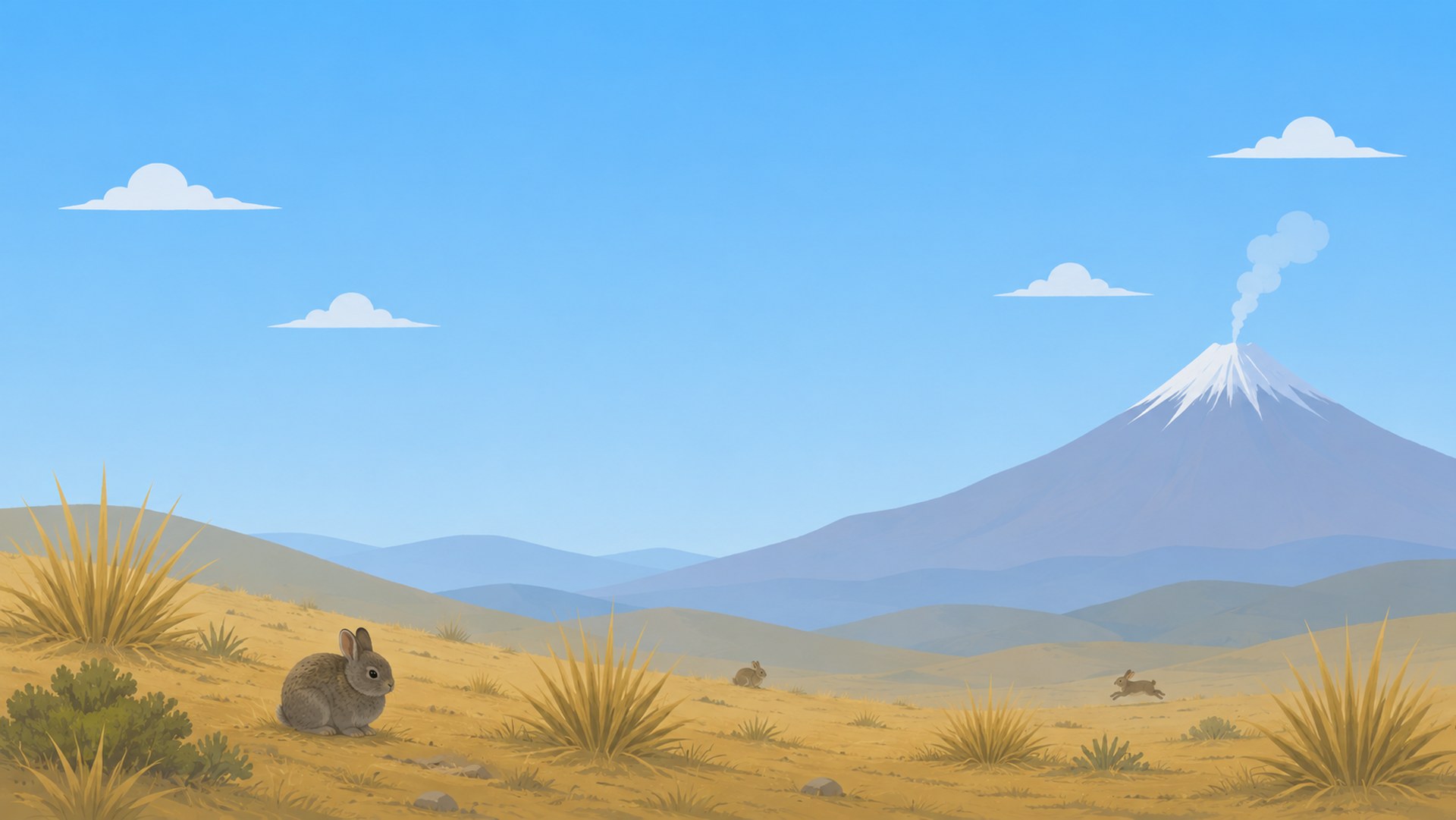
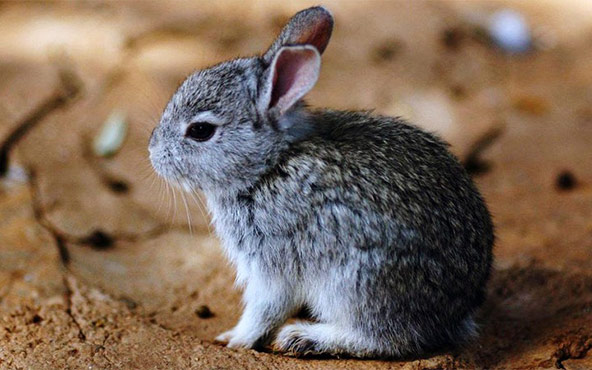
The teporingo is one of the smallest and oldest rabbits in the world. It lives only in the high-altitude grasslands of the volcanoes of central Mexico — and it is disappearing.
The teporingo is not just another rabbit: it is the only living representative of its genus, Romerolagus, an evolutionary branch that diverged from the rest of the lagomorphs millions of years ago.
Also known as zacatuche, volcano rabbit, or burrito, the teporingo is endemic to central Mexico. It lives exclusively in bunchgrass grasslands — locally called zacatonales, dense thickets of tall grasses — on the slopes of the volcanoes of the Trans-Mexican Volcanic Belt, at elevations between 2,800 and 4,250 meters.
Unlike other rabbits, it lives in colonies, communicates through high-pitched vocalizations, and builds networks of tunnels among the roots of the bunchgrass. Its ears are notably short — an adaptation to the cold at high elevations. It is one of the smallest rabbits in the world.
Its survival depends entirely on a fragile ecosystem that is being pressured from every front: Mexico City's urban sprawl is creeping up its slopes, fires and livestock are destroying the zacatonal, and climate change is pushing its habitat ever higher up mountains that have a finite ceiling.
Scientific nameRomerolagus diazi
Common namesTeporingo, zacatuche, volcano rabbit
FamilyLeporidae
Length23 – 32 cm
Weight386 – 600 g
Lifespan7 – 9 years in the wild
Litter size1 – 5 young per litter
DietGrasses, herbs, tender bark
IUCN statusEndangered
NOM-059 (Mexico)Endangered (P)
CITESAppendix I
The other axolotl
There is another Mexico that fits in the palm of your hand.
Axolotl and teporingo: two Mexican symbols on the brink of extinction.
Mexico already loves the axolotl. Now it is time to meet the teporingo.
The axolotl became a symbol of Mexico because it is unique, ancient, and endangered. The teporingo shares that story, but from the volcanoes: small, endemic, and almost unknown.
One survives in the canals of Xochimilco. The other, among the zacatón grasses of Ajusco, Chichinautzin, Iztaccíhuatl, and Popocatépetl.
Both remind us of the same thing: when an ecosystem disappears, we do not lose only a landscape. We lose a unique form of life and a part of what Mexico is.
If we have already learned to defend the axolotl, now it is time to look toward the mountains.
Why it is endangered
A habitat closing in from every side.
The teporingo's population has fallen drastically in recent decades. These are the main pressures it faces today.
i.
Urban expansion
The growth of the Valley of Mexico metropolitan area is encroaching directly onto the slopes of Ajusco, Pelado, and Chichinautzin, fragmenting the teporingo's habitat and isolating its colonies.
ii.
Loss of bunchgrass grasslands
High-altitude grasslands are being cleared, burned, or converted into grazing land and potato and oat fields. Without bunchgrass there is no shelter, no food, and no way to build tunnels.
iii.
Wildfires
Each dry season, fires — many of them human-caused to open up grazing land — consume vast stretches of bunchgrass, killing young and adults sheltering in their burrows.
iv.
Climate change
Warming is pushing the bunchgrass to ever higher elevations. But mountains have a summit: the habitat is shrinking, and there is nowhere left to climb.
v.
Illegal hunting
Although it has been banned since 1966, poaching persists in rural areas, where the teporingo is hunted for food or persecuted as a crop pest.
vi.
Invasive predators and feral dogs
Packs of stray dogs that enter the national parks attack entire colonies. Their impact is one of the least visible — but most documented — pressures in recent years.
Where it lives
Only here, nowhere else in the world.
The teporingo is endemic to the Trans-Mexican Volcanic Belt, a mountainous strip that crosses central Mexico from west to east. Its range is small and fragmented — roughly 386 km² — spread across the states of México, Morelos, Tlaxcala, Puebla, and Mexico City.
Its habitat consists of grasslands of Festuca, Muhlenbergia, and Calamagrostis — the so-called zacatonales (bunchgrass grasslands) — at elevations between 2,800 and 4,250 meters, generally associated with pine and oyamel (sacred fir) forests.
Sierra Chichinautzin
Pelado Volcano
Sierra del Ajusco
Tláloc Volcano
Iztaccíhuatl
Popocatépetl
Lagunas de Zempoala N.P.
Izta-Popo Zoquiapan N.P.
Visit the teporingo and say hello in person
Meet it up close, without disturbing its home.
The teporingo is not just a name on a list of endangered species. It lives, breathes, and peeks out from its burrow. These are the places where you can go to greet it — and begin to defend it.
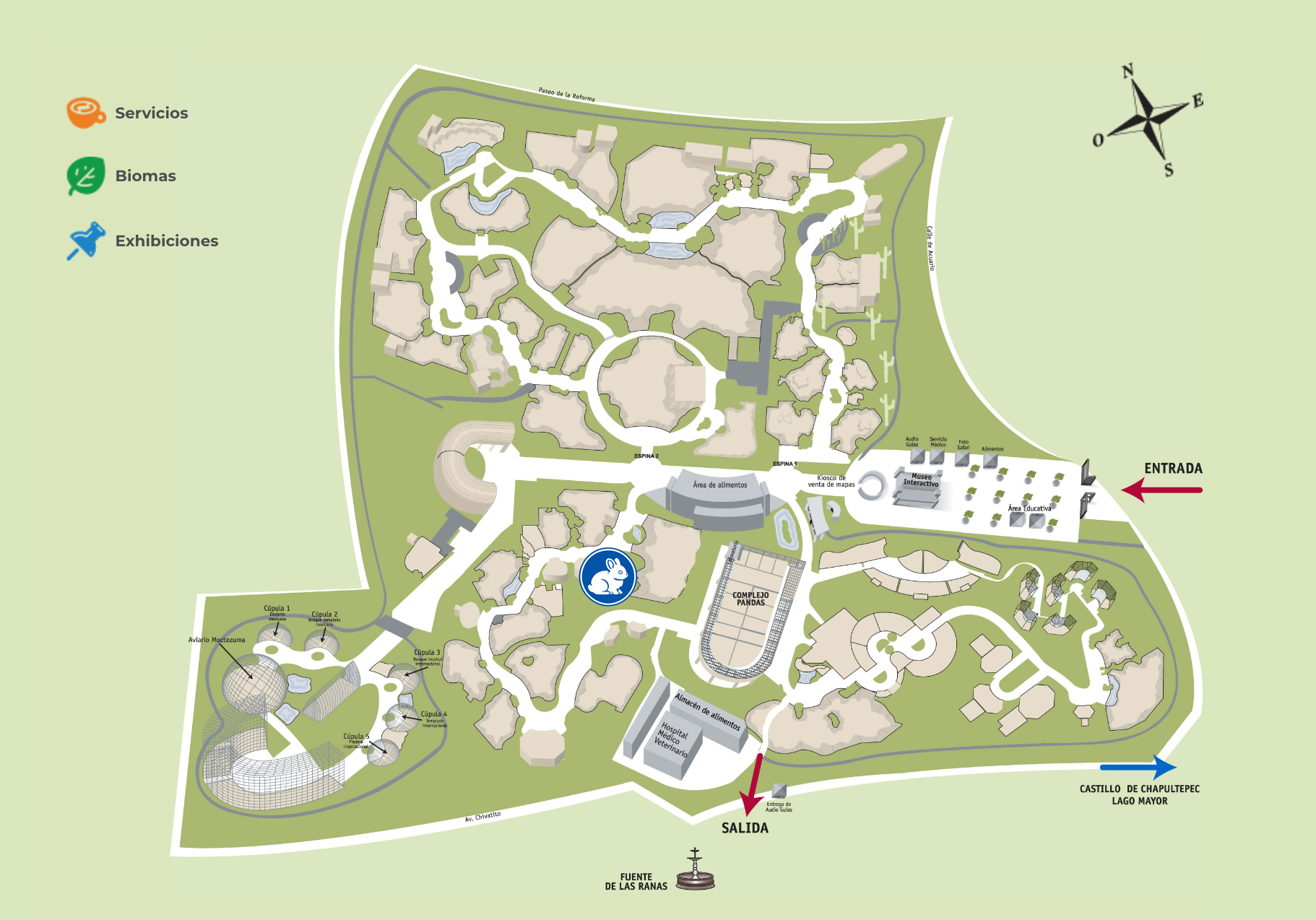
Chapultepec · Mexico City
Alfonso L. Herrera Zoo
Chapultepec Park, First Section
AdmissionFree
HoursTuesday to Sunday · 9:00 a.m. to 4:30 p.m.
ClosedMonday
AddressCalz. Chivatito s/n, Bosque de Chapultepec 1st Section, Miguel Hidalgo, CDMX, Mexico
How to get there
L1
Chapultepec Metro Station
Take the exit toward Bosque de Chapultepec and follow the signs to the Zoo.
L7
Auditorio Metro Station
Walk along Av. Chivatito and follow the signs to the main entrance.
MB
Metrobús
Get off at a nearby stop along Paseo de la Reforma (Museo de Antropología or Auditorio) and walk to the zoo entrance.
If you go, bring respect and silence with you. The teporingo is a small, shy animal, very sensitive to noise. Your visit is more than tourism — it is a small act of conservation.
🏔️
Coming soon: how to see it in its natural habitatWe are preparing routes, contacts, and guides to visit the teporingo at Izta-Popo, Lagunas de Zempoala, the Sierra del Ajusco, and other strongholds.
Coming soon
How to help
Conservation begins with knowing it exists.
You don't have to be a biologist or live near a volcano to make a difference. These are concrete actions anyone can take.
Share the word
Most people in Mexico — and almost no one abroad — has ever heard of the teporingo. Sharing this page, mentioning it on social media and in class is already an act of conservation.
Support protected natural areas
Izta-Popo Zoquiapan and Lagunas de Zempoala National Parks are the teporingo's main refuges. Visiting them responsibly and respecting their rules helps them survive.
Donate to organizations
Institutions like CONANP, Pronatura México, and UNAM carry out research and monitoring of the teporingo. A donation or sponsorship sustains years of fieldwork.
Report sightings
If you live in or visit central Mexico and think you have seen a teporingo, log it on Naturalista MX. Every record feeds the scientific database.
Teach children and young people
If you are a teacher, include the teporingo in your science and geography classes. It is a nearby species — it lives just outside Mexico City — and a powerful symbol for talking about Mexican biodiversity.
Demand public policy
Urban growth onto the slopes of Ajusco and Chichinautzin is not inevitable. Supporting community initiatives, reporting illegal land invasions, and voting for candidates with an environmental agenda has real impact.
Sources and references
Verified information.
All information on this site comes from recognized scientific institutions and conservation bodies. We invite you to dig deeper.